¶¶Òô³ÉÈË

Updated
|
The Debate Over Mandatory AP Exams: Balancing Academic Rigor and Student Well-being
Some public schools are forcing students in AP courses to take the AP exam. Here's a look at both sides of the debate and the potential benefits in store for both students and high schools.

Public schools have taught the Advanced Placement curriculum for decades. AP courses offer students the opportunity to accelerate in the subjects in which they are particularly gifted. In addition, students who score well on AP exams can obtain college credits or test out of courses before ever attending a university. However, some schools are taking the advanced placement program one step further, requiring students to take exams that will bolster the school's own standing in some national rankings.

Those Opposed to AP Requirements

The AP examinations offer many benefits to students, but they cost a lot to take. Most of the exams cost between $50 and $100. Some schools pick up the tab, and others charge students directly for the exams.

One of the complaints parents and students alike have in districts that are requiring the exam is that some families cannot afford the expense of the test. This means some students will not benefit from the Advanced Placement classroom because they can't afford the required exam with the course itself.

Others are unhappy about the requirement to take an exam that may or may not offer much benefit to them. For students taking Advanced Placement courses, the time required to prepare for many examinations may be more than the students can handle. Most will pick and choose the exams to take based on their expectations of which exams they predict they will master.

The percentage of students enrolled in advanced placement courses who

. . .read more

Spitting Rhymes for Flashy Grades: The Link Between Hip Hop Curriculum and Improved Learning

Updated
|
Spitting Rhymes for Flashy Grades: The Link Between Hip Hop Curriculum and Improved Learning
Can rap lyrics and hip hop beats help students learn more? Studies and some public schools say yes!

One, two, three, four - give your algebra class a hip-hop beat score!

Researchers have been studying the link between music and learning for decades, and recent research suggests that listening to music enhances the brain's ability to absorb new information. According to the , a Stanford University School of Medicine study showed that listening to music can help the brain focus and organize information more efficiently.

This news isn't new for millions of students who enjoy listening to their favorite tunes during study sessions. However, for many schools that are now incorporating music into their curriculum, the study supports their efforts to improve students' learning ability with musical selections.

In this TEDx Talk, Edmund Adjapong discusses Transforming Urban Education Through HipHop Pedagogy.

What is Hip Hop?

Hip-hop has become the genre of choice for many schools looking to add music to their basic curriculum and test preparation. Hip Hop, according to , is a cultural movement that originated in the Bronx in the 1970s and quickly spread throughout the African-American and Latin-American cultures in New York City. More recently, hip hop has become a worldwide craze but has particularly spread in popularity throughout the United States.

Hip-hop incorporates four basic elements: DJing, rapping, break dancing, and graffiti art. The music consists of various components, including rapping, sampling, beatboxing, and juggling various beats on old-fashioned turntables. The musical

. . .read more

Charter School Case Studies: Failures Despite Generous Funding and Stanford Backing

Updated
|
Charter School Case Studies: Failures Despite Generous Funding and Stanford Backing
While there are many success stories of charter schools, there are also failures. Learn about two examples of charter schools that have not turned the tide in suffering school districts.

Charter schools have traditionally been known for producing high test scores and academically prepared students despite facing challenges in districts that standard public schools have been unable to overcome. However, the establishment of a charter school does not guarantee improved performance all of the time. Even when plenty of money is invested, and renowned academic experts are called in, the schools may fall short occasionally.

This video explains why charter schools can succeed.

This article reports on two struggling charter schools despite an infrastructure of support.

Trouble Brewing in New Jersey Charter School

Newark's Lady Liberty Academy was a troubled school that many in public education in New Jersey hoped to revive. Situated in a low-income area of the state, those involved with the charter school adopted a new commitment a year ago to show just what the correct type of education could do for at-risk kids.

Newark Mayor Cory Booker wooed in public school superstar Glen Pinder, a high-profile principal from New York's Harlem Children's Zone. Pinder was tasked with turning over a new leaf at Lady Liberty, raising test scores and the morale of staff and students simultaneously.

Unfortunately, even the best-laid plan ran amuck at times, and Lady Liberty was not immune to its share of conflict, according to recent reports at newjerseynewsroom.com. With Pinder came an entirely new administrative team, straight from his home field of New York.

. . .read more

Waiting for Superman: The Heroes and the Villains of Education

Updated
|
Waiting for Superman: The Heroes and the Villains of Education
The latest educational documentary paints a controversial picture of today's educational problems and the right solutions. Learn about both sides of the debate stirred by Waiting for Superman.

Waiting for Superman is the latest documentary to be released into theatres. It depicts the current state of public education and offers recommendations from experts on how to improve a failing school system. This film precedes recent comments by President Obama on the importance of strengthening the quality of education in this country if we are to remain competitive in a global market.

Here is a trailer for Waiting for Superman.

It also comes when severe budget cuts, thanks to the recent economic slowdown, have strapped already cash-pinched schools even further, forcing them to cut additional programs and staff when the public school system is on the brink of disaster.

Waiting for Superman is the brainchild of David Guggenheim, the same documentary filmmaker who brought us "An Inconvenient Truth," the documentary that rocketed former Vice President Al Gore to Nobel Peace Prize status. Sheila Curran Bernard, associate director for documentary film studies at the University of Albany/SUNY, told USA Today, "What gives some of these films their power is not just the content, but also the craft. Imagine how dull 'An Inconvenient Truth' might have been if it were not shaped well."

Telling a Story

The same can be said of Waiting for Superman, a film that follows five families through the public school experience, according to a synopsis on the official movie website. It illustrates how the educational welfare of

. . .read more

Vending Vicious Cycles: The Overhaul of Public Schools' Vending Machines

Updated
|
Vending Vicious Cycles: The Overhaul of Public Schools' Vending Machines
Could sodas, cookies, and candy finally be banished from school vending machines? Learn about the public schools and movement that are finally swapping carrots for candy.

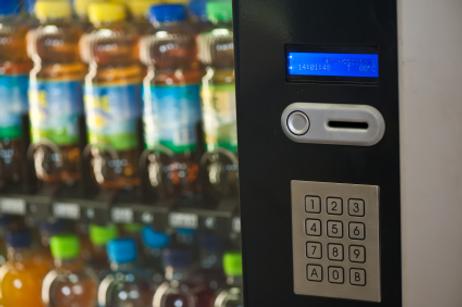
Vending machines have become a mainstay in many public schools today, but nutrition experts fear that the calorie-laden treats lurking inside could be contributing to our nation's obesity epidemic. Some schools have taken action against such temptations by eliminating vending machines, while others are replacing the fare with nutritional options that boast less fat and fewer calories.

Are vending machines in schools a pleasant convenience or a nutritional threat? We will explore this issue to discover the full impact they have on the overall health of our children.

Junk Food Studies

A recent study in the showed that school vending machine purchases added about 253 calories to the diets of the 22% of students who ate them daily. Researchers from the University of Michigan, Michigan State University, and Food & Nutrition Database Research Inc. of Okemos, Michigan, conducted the study. The data was collected from 2,309 students nationwide in grades 1-12, and the findings were published in the September issue of the Journal of School Health.

The study also found that the most popular vending machine selections included soda pop, candy, chips, crackers, cookies, cakes, and ice cream. Healthier selections, including low-fat milk, fruit juice, and fruit, were also purchased.

In addition to the added calories, children who regularly snacked from vending machines added ten more grams of sugar to their diet daily. The same kids consumed less fiber, iron, and B vitamins overall.

The Problem with Obesity

It is

. . .read more

Recent Articles

School Vouchers: Updated Pros and Cons (2025 Review)
Comprehensive 2025 analysis of school vouchers, weighing benefits and challenges for families, funding, outcomes, and policy directions.
Benefits and Drawbacks of Homework in 2025
Explore updated 2025 insights on homework’s benefits, drawbacks, mental health impact, best practices, and policy trends in U.S. public schools.
Charter Schools vs Public Schools 2025: Key Differences & Trends
Explore updated 2025 insights comparing charter schools vs public schools, enrollment, academic outcomes, funding, and real-world examples for families and educators.