抖音成人

Updated
|
The Hidden Costs of Public Education
As the school year kicks into full swing, we examine the many fees and other hidden costs lurking in a 鈥渇ree鈥 public education today.

The back-to-school ritual has become expensive for families across the country today. While 鈥減ublic鈥 education tends to imply free schooling, that is no longer the case for many cash-strapped school districts. Before you send your kids off to the hallowed halls of their neighborhood schools, check out how much that public school might set your checkbook back.

Mandatory Fees Add Up Quickly

Mandatory fees may encompass everything from textbook fees to the cost of technology. Although the ACLU takes the consistent stand that requiring fees for public education is illegal, the practice is becoming widespread as school districts grapple with budget cuts. According to , the cost of those mandatory fees can vary widely, from $20 or $40 a student to hundreds per student in some districts.

Gawker recently published a report that included a copy of a fee slip from a high school in Park Ridge, Illinois. The slip shows fees totaling nearly $600, with $300 for a required Chromebook that students must purchase even if they have their laptop or tablet at home. The slip also listed generic 鈥10th Grade Fees鈥 at $114 and several smaller fees for textbooks and a yearbook.

This video from the Cato Institute examines the true cost of public education.

Extracurricular Activities Don鈥檛 Come Cheap

Clubs and sports are another area when many parents feel the stab in their pocketbooks. NBC News
. . .read more

Colorado Schools: Denver Schools Receive $10 Million Gates Foundation Grant

Updated
|
Colorado Schools: Denver Schools Receive $10 Million Gates Foundation Grant
DPS has created a teacher effectiveness system known as LEAP. Thanks to a $10 million grant from the Bill and Melinda Gates Foundation, the district may explore new initiatives for LEAP, which will directly affect how teachers and administrators are evaluated in the state.

The Bill and Melinda Gates Foundation recently recognized Denver Public Schools for their work on an innovative teacher evaluation system. The new system, known as LEAP, received a new $10 million grant from the foundation, which recognized three years of advancements by the school district. Denver Public Schools plans to use the money to continue improving and refining its evaluation model, which has become an example for other school districts nationwide.

Progress Rewarded

According to a press release on the DPS website, the grant was given based on the district's successful progress of the teacher evaluation initiatives. The grant is actually a renewal of an earlier $10 million grant provided by the foundation, which was used to launch the evaluation system in 2011. The system expanded to include all schools in the district by the 2012-2013 school year. The new funding will allow the program to reach full implementation throughout the school district.

鈥淲e are very appreciative of this additional investment in the important, collaborative work we鈥檝e been doing to support our teachers and to help our students achieve,鈥 Tom Boasberg, superintendent of Denver Public Schools, stated in the press release. 鈥淲e have worked closely with our teachers and our school leaders to build a system that develops and recognizes high-quality teachers, and positively impacts our schools and students.鈥

This video reports on the LEAP grant.

About LEAP

LEAP stands for Leading Effective

. . .read more

Detroit Schools: Can New Emergency Manager Turn the Tide ?

Updated
|
Detroit Schools: Can New Emergency Manager Turn the Tide ?
A new EM has come to Detroit, but time will tell whether this new ringleader will be able to make a positive impact on the schools in the city that have failed to pass muster.

Detroit Public Schools have been struggling with a myriad of problems for many years, from budget woes to dismal graduation rates. In 2009, the district was subjected to a state takeover, which resulted in the appointment of an emergency manager to turn the failing school district around. Recently, the third emergency manager was appointed to the beleaguered district, with ideas for a turnaround that incorporate both old and new concepts.

Introducing Jack Martin

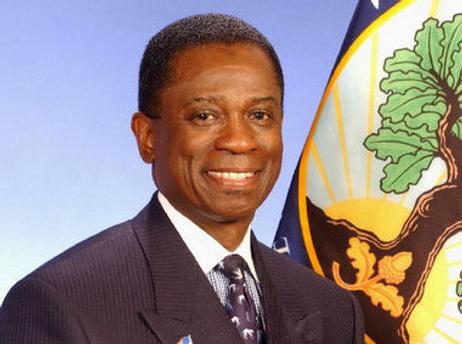
The reports that Michigan Governor Rick Snyder recently announced the appointment of Jack Martin to the post of an emergency manager for Detroit Public Schools. Martin boasts an impressive resume, serving as both the CFO for the U.S. Department of Education and more recently, as the chief financial officer for the city of Detroit. He has also run his own accounting firm and served under three U.S. presidents in various posts.

A product of DPS himself (he went to both Thurgood Marshal Elementary and Cass Technical High School), Martin has firsthand knowledge of the public education environment in the city. He also has a personal stake in seeing his own school system succeed. To that end, Martin brings in plenty of ideas for transforming Detroit schools into the bustling halls of academia they once were.

鈥淭he opportunity will allow me to continue offering leadership and making a positive impact in the Detroit community,鈥 Martin was reported as saying on . 鈥淔ixing education in Detroit

. . .read more

Back to School Means Renewed Debate Over Later Start Times for Students

Updated
|
Back to School Means Renewed Debate Over Later Start Times for Students
With back to school just around the corner, the debate over when to start and end school has revved up once again.

As students begin to face the realization that their days of sleeping in are nearly over, school districts continue to debate the benefits of later start times for older students. With plenty of research to back up the idea that teens sleep on a different cycle than many schools allow, districts must once again consider the theory that later start times could mean higher student performance. Would later start times really impact how well high school students learn?

Research Supports Later Start Times

As back-to-school logistics are put into place, research on the benefits of later start times comes back into play. There is plenty to choose from in that category with most showing teens that head to class later tend to perform better overall. Unfortunately, coordination of school schedules doesn鈥檛 always support allowing teens the later start.

According to a recent report at , 40 percent of high schools in the United States start prior to 8:00 a.m. A small minority, 15 percent, start after 8:30 a.m. That minority is often the result of coordination of bus schedules, which tends to favor younger students for the later start times.

Logistics aside, research certainly seems to favor allowing older students to hit the books later. Students in the teen years require just as much sleep as younger children, according to the . That amount can range from 8 陆 to 9 录 hours of sleep every night. Decades of studies support

. . .read more

Parents Spending More to Send Kids Back to School

Updated
|
Parents Spending More to Send Kids Back to School
The pandemic has turned back to school supplies into expensive items. Shortages, supply chain problems, surges in consumer buying during lockdown - all have contributed to the current situation.

As kids and parents get ready for the back-to-school flurry, it doesn鈥檛 appear pocketbooks will open up quite as much as last year. According to three different national surveys, parents are planning to pare back on school spending this year, although the specific amount varies somewhat. As kids lament the end of their summer vacations, parents are on the hunt for ways to save as they equip their kids for their new classroom experiences.

Spending Expectations from National Retail Federation

The predicts spending for back-to-school to be significantly more per family than it was last year. This time last year, the average family in the United States spent $688 on school supplies, clothing, shoes, and backpacks to send the kids back to school in style. This year, that number is expected to be closer to $634.

The NRF predicts overall back-to-school and off-to-college spending will total $72.5 billion. The majority of that will come from college costs, while back-to-school spending should total around $26.7 billion of that larger number. The average family sending a child to college is expected to spend around $836, as opposed to $907 that was spent last year.

鈥淭he good news is that consumers are spending, but they are doing so with cost and practicality in mind,鈥 Matthew Shay, president, and CEO of the National Retail Federation stated on the organization鈥檚 website. 鈥淗aving splurged on their growing children鈥檚 needs last year, parents will ask their kids to

. . .read more

Recent Articles

School Vouchers: Updated Pros and Cons (2025 Review)
Comprehensive 2025 analysis of school vouchers, weighing benefits and challenges for families, funding, outcomes, and policy directions.
Benefits and Drawbacks of Homework in 2025
Explore updated 2025 insights on homework鈥檚 benefits, drawbacks, mental health impact, best practices, and policy trends in U.S. public schools.
Charter Schools vs Public Schools 2025: Key Differences & Trends
Explore updated 2025 insights comparing charter schools vs public schools, enrollment, academic outcomes, funding, and real-world examples for families and educators.