抖音成人

Teaching

Parents Refuse Common Core Testing

Updated
|
Parents Refuse Common Core Testing
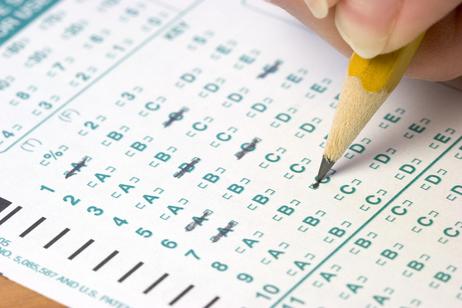
Parents nationwide are opting out of state testing. Hoping to send a message to lawmakers, they are refusing to allow their children to take standardized tests.

Parents Refuse Common Core Testing

In communities all over the country, parents are choosing to opt their children out of Common Core testing. In schools from coast to coast, April has become 鈥渢esting season,鈥 the time of the year when students in grades K-12 sit for standardized tests in math and English language arts. Because of initiatives like No Child Left Behind and Race to the Top, which is intended to measure and improve student performance, some students sit for up to nine to twelve hours of testing over the course of a few weeks.

Race to the Top

The Race to the Top program, which began in 2009, offers grants totaling billions of dollars to states that follow guidelines for education innovation. In order to qualify for the competitive grants, states must build 鈥渄ata systems that measure student growth and success, and inform teachers and principals about how they can improve instruction.鈥 To gather the data necessary to meet this requirement, states have implemented standardized testing for all public school children.

Why Opt-Out?

In 2014, some parents decided they鈥檇 had enough of high-stakes, long-duration testing. Around the country, handfuls of students showed up on testing days clutching formally worded notes from their parents explaining that they were 鈥渙pting out鈥 or refusing to take the standardized tests.

There are several reasons why parents are rejecting Common Core Testing:

  • Parents believe students suffer unnecessary stress due to hours of testing.
  • Teachers are forced to 鈥渢each to the test鈥 which
. . .read more

Falling SAT Scores: Why are Students Testing Lower this Year?

Updated
|
Falling SAT Scores: Why are Students Testing Lower this Year?
We analyze lower SAT scores reported this year across the country and possible reasons why scores have been on a decline for the past 40 years.

SAT scores have traditionally been used as more than simply a means for getting into college; they are also an effective benchmark to determine college readiness among high school students today. Unfortunately, a steady decline in SAT scores over a number of decades has some worried that the next generation to enter college and the workforce will not be as well prepared as previous generations. As these numbers get a closer look by educators and politicians across the country, many are voicing concern that the United States鈥 place in the global marketplace may be at stake as well. What is the reason for the decline?

How the Benchmark Works

A recent report by shows that only 43 percent of high school seniors met SAT college and career readiness benchmarks this year. This benchmark offers insight into the level of academic readiness exhibited by high school seniors, which typically translates to their level of success in a college environment. The benchmark was developed by educators and policymakers interested in finding the best ways to prepare students for higher education at the secondary level.

The explains the significance of the SAT benchmark and how the numbers shake out. The benchmark combines scores in reading, writing, and mathematics, with a possible cumulative score of 1550 out of a total of 2400 points possible. Students who achieve the benchmark are thought to have a 65 percent likelihood of earning an average grade

. . .read more

Will Public School Students Soon be Taking More Standardized Tests?

Updated
|
Will Public School Students Soon be Taking More Standardized Tests?
Learn about the environment of standardized testing in today's public schools, and how President Obama's proposals may continue the No Child Left Behind's mandate for increased testing.

Standardized testing has become a widely adopted approach to measure student progress and performance 鈥 and based upon some of President Obama鈥檚 proposals, more tests may be on the horizon for your child. In fact, the federal initiative No Child Left Behind even made standardized testing mandatory for all public schools.

While standardized testing may be one way to effectively measure student learning, many educators argue that students spend far too much time in school simply learning how to take tests. As a result, students and teachers lose out on more valuable lessons and complex instructional activities. Ultimately, leaders are looking ahead to see whether or not students will be forced to endure even more hours of rigorous testing.

Former School Testing Policies

Former President George W. Bush initially created his No Child Left Behind (NCLB) act in order to ensure that all public schools were effectively educating its students. As a result of NCLB, every public school was required to give their students specific subject area tests.

If students failed these tests, their school was put on an action plan and potentially lost some of its funding. On the other hand, if students passed these tests, their school was often financially rewarded with increased funding. While on the surface level, it appears as though NCLB would help reward successful schools, many experts argue that it has only severely punished kids who are in schools with lower budgets, less supplies, and larger class sizes.

. . .read more

Inclusion or Exclusion? The ESL Education Debate

Updated
|
Inclusion or Exclusion?  The ESL Education Debate
The debate over the best approach to ESL education continues to evolve with new trends and technological advancements. This article explores the pros and cons of full inclusion vs. specialized support programs for ESL students, providing insights into how schools can balance educational needs and budget constraints.

With classrooms becoming more diverse, public schools are experimenting with new language programs to enhance ESL student learning.

ESL students, standing for English as a Second Language, typically need additional resources and support to adjust to the various linguistic complications of learning a new language. As a result, ESL students typically require additional funding.

However, as public schools are coping with reduced funding due to the economic recession, educational experts debate the best approach to balancing school budgets while caring for each child鈥檚 language development. To save costs, some schools and states have created mandatory full inclusion programs, where ESL students are immersed in a regular-paced English class with fluent English speakers. This strategy will reduce the costs of ESL specialists while still engaging ESL students in an atmosphere for learning.

While this approach helps balance school budgets, many educators and parents argue that the full-inclusion classroom is ineffective for both fluent and ESL children.

Public Schools and ESL Programs

As The Multicultural Education Journal explains, the 2001 national mandate, No Child Left Behind, required all public schools to help ESL students become proficient in English, as both fluent and ESL students are mandated to meet state and national achievement standards. While public schools are legally required to provide educational support for ESL kids, many experts assert that the current approach is ineffective and flawed. As the number of minority students is rising each year in the United States, experts predict that by the

. . .read more

The Truth about the Power of Standardized Test Scores

Updated
|
The Truth about the Power of Standardized Test Scores
Learn about the true importance of standardized test scores in today鈥檚 competitive college admissions process.

After hours of cramming, attending test prep courses, and enduring long hours of practice exams, students wonder how much-standardized test scores matter.

Some experts argue that standardized test scores are not an accurate measure of a student鈥檚 intelligence, while others assert that these scores help gauge a student鈥檚 abilities more accurately. With this raging debate, recent studies reveal the true influence of standardized test scores on a high school student鈥檚 college application and acceptance.

Why Take Standardized Tests?

With a rising number of students applying to community colleges and universities, most schools now require all applicants to complete standardized tests. The most popular standardized tests include the SAT or the ACT assessments. In fact, according to , American students today are among the most tested students in the world! Studies show that students combined in the United States take nearly 100 million tests yearly.

With the excessive testing forced upon American children and teens, many wonder: What鈥檚 the point? As Scholastic further explains, these tests have an array of reasons and purposes. Specifically, standardized tests are 鈥淰iewed as a measure of teacher and school competence and, in some cases, can affect a child's future placement in a school.鈥

Some tests are designed to ensure that all students meet average progress rates. In contrast, other tests aim to assess each student鈥檚 unique abilities as they continue to apply for higher education institutions. These

. . .read more

Recent Articles

Preventing Suicide in Schools: 2026 Guide for Educators
Learn updated 2026 strategies for preventing suicide in schools, including warning signs, intervention plans, and school-wide mental health support.
The Impact of Social Media on Students (2026 Update)
Explore the impact of social media on students in 2026, including academic, mental health, and safety insights for parents and educators.
Building a Summer Reading Plan That Keeps Kids Engaged
Learn how to build a summer reading plan that keeps kids engaged, motivated, and improving literacy skills throughout the break.