抖音成人

Parenting and Learning Issues

Each child learns differently. Here we offer resources on learning styles and the classroom models that support them, expert advice on how to improve learning, and tips on parental involvement.

View the most popular articles in Parenting and Learning Issues:

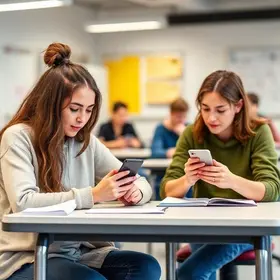
Banishing the Phone-based Childhood

Updated
|
Banishing the Phone-based Childhood
The article advocates for a dramatic cultural shift - delaying kids' smartphone ownership until high school and social media access until 16, promoting more free play, and fostering a healthier, screen-free childhood through collective action.

Banishing the Phone-based Childhood

My late wife had a "brick," as those were affectionately nicknamed. Back in the 90s, there were very few cell phones worldwide. Those early cell phones were bulky, expensive, and used primarily by business people. At that time, the pager was the only affordable signaling technology available to consumers. I remember keeping a pager in my belt when I ran with the local volunteer fire department. It wasn't until the 2000s that cell phones became affordable and widely available. The computing power of current smartphones is mind-boggling. That power, universal availability, affordability, and connectivity partnered with social media in all its forms have unleashed a phenomenon known as the phone-based childhood.

So, let's take a look at this phenomenon and its ramifications.

A professor from New York University says our 蝉辞肠颈别迟测鈥檚new phone-based childhoodis making young people sick and blocking their progress toward success during adulthood. He says weneed a dramatic cultural correction, and we need it now.Source:

After smartphones replaced flip phones, young people had the Internet in their pockets. They could use their phones anywhere, anytime. And that is the root of the problem: Young people have become addicted to their phones. Social interaction, reading, and playing outside are the 1990s and 2000s artifacts.

Growing up, we went outside to play in good weather. We played board games or worked jigsaw puzzles when the weather was

. . .read more

Demystifying IEPs

Updated
|
Demystifying IEPs
Unlock the power of Individualized Education Programs (IEPs) in this comprehensive guide. Discover how IEPs support students with diverse needs, including behavioral challenges. This article is a must-read for parents navigating the education system and aspiring teachers seeking to make a positive impact.

have been a game-changer in education, offering tailored support to students with a wide range of special needs. From students with learning disabilities to those struggling with behavior, IEPs have played a pivotal role in ensuring every child receives a quality education. This guide will demystify IEPs and explore how they benefit students, especially those facing behavioral challenges.

Understanding the Origin of IEPs

The roots of IEPs can be traced back to the Education for All Handicapped Children Act, now known as the , signed into law in 1975. This groundbreaking legislation mandated that students with disabilities, including those with behavioral challenges, have the right to a free and appropriate public education tailored to their unique needs. The development of IEPs was a critical component of this law, ensuring that students received individualized support plans to help them succeed academically and behaviorally.

In special education, there's too much emphasis on the deficit and not enough on the strength.

Temple Grandin

The IEP Basics: What Parents Need to Know

For parents, understanding the basics of IEPs is essential. An IEP is a legally binding document that outlines a student's unique learning and support needs and the services and accommodations they will receive. It's a roadmap to success, customized to each child. The IEP process typically involves assessment, goal setting, and regular review meetings.

This video explains what an IEP is.

. . .read more

Preparing for a Successful 'Back to School'

Updated
|
Preparing for a Successful 'Back to School'
A one-stop guide for parents navigating the 'back to school' season, providing practical and effective strategies tailored to every grade level - from pre-K to high school.

The start of a new school year can bring a mix of emotions for parents and children - from excitement and anticipation to anxiety and fear of the unknown. It's also a time when parents have to buy school supplies, clothes, uniforms, smart devices, and more. This article, however, will focus on the transition from being away from school to resuming the structured routine that is the essence of a public school education.

With some preparation, navigating this transition smoothly and setting your child up for success in their new grade is possible. Here's how to tackle the 'back to school' season, regardless of your child's grade level or family's circumstances.

With fears and potential adaptations still ahead for parents and children, return to school is always a time when parents and teachers revisit what is important for children and how to best support their positive development. Marilyn Price-Mitchell

PK-Kindergarten

Building a Routine

For many children, starting pre-K or kindergarten is their first taste of a structured daily routine. Establishing and practicing routines - like a consistent bedtime and a morning routine that includes getting dressed, brushing teeth, and eating breakfast - can help your child adjust more easily to the school day. Creating a visual schedule or using alarms and reminders can be valuable in maintaining consistency for families with single parents or busy schedules.

Reading Readiness

Strengthening pre-literacy skills can set the foundation for academic success. Simple activities like reading to your child daily, practicing

. . .read more

The Evolving Role of Interim Assessments

Updated
|
The Evolving Role of Interim Assessments
Explore the often-overlooked tool in K-12 education - interim assessments. Understand what they are, their importance, and how they can enhance your child's learning experience. Dive into real-world case studies and find out how technology is changing the game. This informative, parent-friendly article aims to shed light on the value of these assessments in today's educational landscape.

The Evolving Role of Interim Assessments

Let's talk about school tests. Remember those pop quizzes, final exams, and everything in between?

  • Today, I'd like to introduce you to a type of assessment you may need to learn about - .
  • In an ever-evolving education landscape, these play a crucial role.

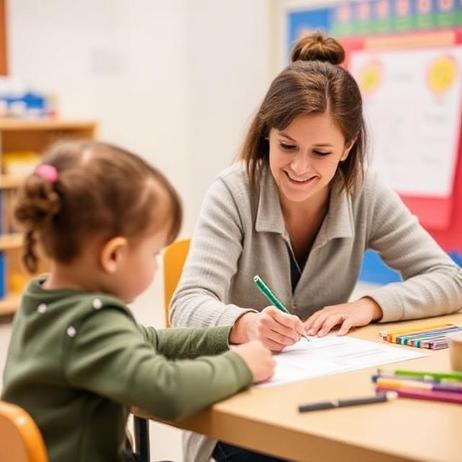
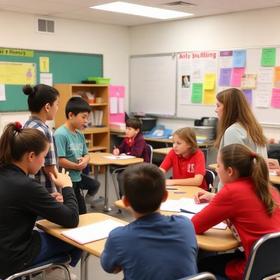
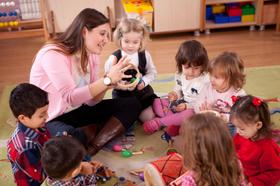
Canva generated this picture of a teacher with her students.

Understanding Interim Assessments

Interim assessments are like temperature checks for learning.

They happen a few times throughout the school year, helping teachers gauge where students are in their learning process.

Unlike the pop quizzes that check daily learning or the end-of-year exams that measure what a student has learned, interim assessments sit snugly in between. These can be benchmarks to compare student learning against standards, diagnostics to pinpoint specific gaps, or progress monitoring tests to see how well a student is advancing in their learning journey.

Interim assessments are a type of educational assessment that is conducted at specific points during the school year to gauge students鈥 progress and provide feedback to teachers and administrators. Source:

The Importance of Interim Assessments

Think of your child's learning journey as a road trip.

  • You wouldn't want to drive across the country without a GPS or roadmap, right?
  • Interim assessments are like GPS, providing regular updates on where the students are.
  • They help teachers navigate the teaching
. . .read more

Overcoming Common Reading Difficulties

Updated
|
Overcoming Common Reading Difficulties
Follow the story of Sarah, a fictional character who overcame common reading difficulties with the help of the three cueing system. This blog post explores the advantages and disadvantages of the three cueing system and provides strategies for implementing it effectively.

Learning to read can be a challenging task for many children. Some children may struggle with decoding words, while others may have trouble with comprehension. Luckily, there are effective methods for teaching reading, such as the three-cueing system.

Sarah's Story

In this blog post, we will follow the fictional story of a young girl named Sarah, who overcame common reading difficulties with the help of the three cueing system. Sarah was a bright and curious child who loved to explore the world around her. However, when it came to reading, she struggled. She would often get frustrated when she couldn't decode a word or understand the meaning of a sentence. Finally, her parents and teachers noticed her difficulties and decided to seek help.

The Struggle to Read

Sarah's journey to learning to read was not an easy one. She struggled with decoding words and often guessed the meaning of sentences based on the context. Her parents and teachers tried various methods to help her, but nothing worked. As a result, Sarah became increasingly frustrated and started to lose confidence in herself. However, things began to change when Sarah's teacher introduced her to the three-cueing system.

A reading expert explains how we can help struggling readers.

The Three Cueing System

Sarah's teacher explained that the three cueing system was a method of teaching reading that focused on three types of cues: meaning, structure, and

. . .read more

Recent Articles

Public School Open House & Enrollment Season Guide for Parents
Learn what to ask at a public school open house during enrollment season, from academics to safety, to choose the right school for your child.
School Zoning Changes 2026: How Assignments May Shift
School Zoning Changes 2026 could affect your child鈥檚 school assignment. Learn how zoning works, what is changing, and how families can prepare.
School Vouchers: Updated Pros and Cons (2025 Review)
Comprehensive 2025 analysis of school vouchers, weighing benefits and challenges for families, funding, outcomes, and policy directions.

Parenting and Learning Issues

IMPROVING LEARNING
A comprehensive look at the latest trends, expert advice and recent studies into improving student learning. Explore the latest studies into links between student performance, sleep and music. See why schools are opting for later start times and year round schedules.
PARENTAL INVOLVEMENT FROM K-12
Learn how direct involvement in your child鈥檚 education can impact school performance. Get expert advice on how to get involved, learn why and when you need to talk to a teacher and ways to make changes on campus.
BULLYING
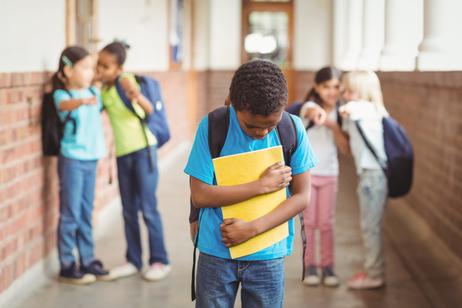
An overview of bullying in schools, laws to protect students, and the impact on education. This section provides great tips on protecting your child from being bullied or becoming a bully. Learn about the latest anti-bullying laws and see how cyber-bullying effects your child鈥檚 school performance.
TYPES OF LEARNING
What type of learner is your child? Be in the know about different types of learning and which classrooms are best suited for each type. What is project-based learning? Cooperative Learning? Would your child benefit from a blended learning experience? Explore these teaching techniques and learn how they could improve your child鈥檚 performance.
KINDERGARTEN AND ELEMENTARY ISSUES
Weigh the pros and cons of preschool, full day kindergarten and other issues affecting our youngest learners. Learn what can be done to help your child prepare to enter school, boost confidence, and encourage reading at the grade school level.
HIGH SCHOOL ISSUES
Learn more about issues specific to high school students. Get an overview of high school graduation rates, college readiness, career choice and social issues impacting teenagers in public schools.