抖音成人

Local School Topics

We've organized this category into four geographic subcategories to make it easier for you to peruse these archival articles.

View the most popular articles in Local School Topics:

Chicago Schools: Strike Looms

Updated
|
Chicago Schools: Strike Looms
Recent developments within the Chicago Teachers Union have authorized a strike, but has not yet determined whether a walk-out will be necessary. Subsequent action will be determined by summer negotiations between the union and school administrators, but what does this mean for students?

Chicago teachers, frustrated with changes made by Mayor Rahm Emanuel that did not include input from the teachers鈥 union, have voted to strike this summer if contract negotiations do not take a positive turn. The vote comes in the midst of ongoing consideration of numerous contract issues, as a preliminary strike on Chicago school officials working to come to an agreement between administration and teachers. While the strike would not occur for another two months, it sends a significant message to Chicago school officials that teachers across the Windy City are not happy with the turns in public education taken over the past year.

Longer School Days, Less Pay at Heart of Conflict

According to the , Chicago teachers are unhappy with Mayor Rahm Emanuel鈥檚 decision to rescind four-percent teacher raises last year. The mayor then worked around the union to authorize increasing the length of the school day to seven hours, after his initial efforts to lengthen school hours were blocked by the Illinois Education Labor Relations Board. Currently, Chicago public school students boast the shortest school day of any large school district in the country 鈥 with just five hours and 45 minutes currently spent in class.

The Chicago Teachers Union has stated that actual instruction time in Chicago schools is on par with other districts across the country. When the union wouldn鈥檛 work with Emanuel on lengthening the school day in light of reduced pay increases, the mayor went directly to

. . .read more

Florida Schools: New Grading System

Updated
|
Florida Schools: New Grading System
We examine the new grading system that will launch in Florida schools this fall, which was necessary to comply with NCLB standards and current state statute. Will more schools fall behind as a result?

In anticipation of Florida鈥檚 new grading system, and in light of the potential fallout that is to follow, the state is providing special guidelines for Florida public schools this year. While the one-year rule will keep school ratings relatively consistent over the next year, some worry that once the new system goes into place, Florida schools are going to struggle to meet minimum standards in many areas of the state.

This TEDTalk discusses the downsides of a traditional grading system.

The Need for a New System

Like other states across the country, Florida will not be able to meet 100-percent proficiency requirements by 2014, as mandated under the No Child Left Behind Act. The state has applied for an NCLB waiver but must meet certain criteria set by the federal government in order to have that waiver approved. According to the , the Florida Board of Education recently voted for changes that will be necessary in order to receive waiver approval.

The five new amendments will comply with new No Child Left Behind waiver rules, as well as the current Florida statute. All of the amendments deal directly with the state-issued grading system used for schools, which is used to hold schools accountable under state and federal law. The changes come simultaneously with higher passing scores on standardized tests. While educators agree the bar should be raised, there is some

. . .read more

Chicago Schools: Discipline & Fines

Updated
|
Chicago Schools: Discipline & Fines
The latest effort in Chicago schools to discipline student by administering monetary fines for breaking rules is highly controversial, and we鈥檒l analyze both sides of the issue.

Most educators would agree that the proper amount of discipline is essential to a healthy learning environment. However, the means of achieving that discipline has been a debate that has raged for decades. The latest system implemented in Chicago charter schools is no exception. Students in these schools pay a hefty price 鈥 quite literally 鈥 for even the smallest infractions. And while charter school staff members believe that price has resulted in more orderly classrooms and higher student achievement, some parents and students think it borders on harassment.

The Charge for Rule-Breaking

The Noble Network of Charter Schools in Chicago has implemented a new discipline program that involves fining students for infractions of all kinds. Last year, when the system was first introduced, the Noble school system collected nearly $190,000 for rule-breaking that ranged from chewing gum to bringing a cell phone into class. The money raised went to pay for the after-school detention program and the dean of discipline position that oversees the program at all the Noble schools.

Students caught with shoes untied or shirts un-tucked, chewing gum, or using cell phones are given demerits for breaking the rules. For example, an untied shoelace is worth one demerit, while cell phone use costs four demerits. Students who receive four demerits in a two-week period are fined $5 and receive after-school detention. If a student gets a total of 12 demerits in a single school year, he must attend a behavior class over the

. . .read more

New York City Schools: Teacher Rankings Released For First Time

Updated
|
New York City Schools: Teacher Rankings Released For First Time
Explore the controversial decision by New York schools to release 15,000 teacher performance rankings to the general public this week.

After an eighteen-month court battle, the city of New York is releasing 18,000 individual teacher rankings to the media and the general public. The ratings, known as Teacher Data Reports, involve 4th through 8th-grade math and English teachers. The rankings were designed to demonstrate the progress a teacher鈥檚 students have made on state standardized tests. The results are based on data compiled since 2007, but this is the first time the information is available to those outside the school system.

Why Rank Teachers?

According to a report in the , the teacher rankings started out as a pilot program four years ago. The purpose of the program was to provide measurable data that would help improve the instruction at 140 of the city鈥檚 schools. The system was created in response to President Obama鈥檚 Race to the Top program, according to The Slatest. This federal program allows funding to states for public education, based on federal requirements to turn around low-performing schools.

The rankings have also been used by the city school districts to make decisions about teachers, such as tenure decisions and firings. The rankings were originally designed to be an objective piece of data that would help school districts distinguish between effective and ineffective teachers. The information was not originally intended to move beyond the school system, which is where the data could be used for the benefit of teachers, schools, and students.

This video reports on ranking

. . .read more

New York City Schools: College Readiness

Updated
|
New York City Schools: College Readiness
Despite Mayor Bloomberg鈥檚 efforts to show progress in graduating college-ready high school students, new statistics show that 75% of high school graduates will require some sort of remedial work in college.

Since Mayor Michael Bloomberg took office, the city of New York has focused on improving dismal high school graduation rates. To that end, Mayor Bloomberg has boasted that the city has seen huge success. However, more recent numbers indicate that graduating students from high school is not enough for the youth of New York City. Now, college readiness has become a concern, and the numbers there are not nearly as encouraging.

Dismal Numbers Indicate Preparation is Lacking

According to a recent report in the , only one in four New York City students is ready for the rigors of a college curriculum after graduating from high school. Minority students see even lower figures in college readiness after high school. The recent data has many educators and legislators throughout the city up in arms as they realize that graduation rates may not be enough to ensure students leaving New York schools are ready for the job market of the 21st century.

鈥淭he reality today is that a high school degree is not enough for the average student to compete,鈥 City Councilman Ydanis Rodriguez told NY1.

Additional data collected by city officials showed the same distressing results 鈥 75 percent of New York high school graduates did not have sufficient Regents and SAT scores to avoid remedial classes in their first year of college. Remedial classes often have a negative impact on college completion rates, since students must use valuable time and tuition

. . .read more

Recent Articles

Public School Open House & Enrollment Season Guide for Parents
Learn what to ask at a public school open house during enrollment season, from academics to safety, to choose the right school for your child.
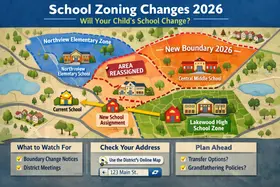
School Zoning Changes 2026: How Assignments May Shift
School Zoning Changes 2026 could affect your child鈥檚 school assignment. Learn how zoning works, what is changing, and how families can prepare.
School Vouchers: Updated Pros and Cons (2025 Review)
Comprehensive 2025 analysis of school vouchers, weighing benefits and challenges for families, funding, outcomes, and policy directions.

Local School Topics